Not sure which of the types of camera shots you’re looking at in a scene? Shot size is the key: it sets how much of the subject and setting fills the frame, and that shapes what a scene stresses.
This guide sits within our film analysis series, and it gives you a working vocabulary for reading any frame.
| Shot | Key fact |
|---|---|
| Core shot types | Nine core shot types |
| Full shot | Subject framed head to toe |
| Medium shot | Subject framed from the waist and above |
| Medium wide shot | Subject framed from the knees and above |
| Cowboy shot | Subject framed from the mid-thigh and up |
| Medium close-up | Subject framed from the top of the chest to the shoulders |
These descriptions come from StudioBinder’s guide to shot sizes and Epidemic Sound’s camera shot guide. Guides describe the cut-off points a little differently and can change over time, so check the sources before you rely on them.
What shot size means in film
Shot size is how much of the setting or subject the frame displays, according to StudioBinder. Combined with camera angle, it defines the visual language of a film.
Each size carries its own narrative value, and every choice changes how you receive the shots around it, as StudioBinder explains. That is why judging shots one at a time only gets you halfway.
On a shot list, sizes are usually abbreviated to two or three letters, such as CU for a close up and WS for a wide shot, per the same StudioBinder guide. Learn the shorthand and shot lists become much easier to read.
Shot size is one layer of a film’s craft, and it pairs well with a look at the three act structure in film.
Wide shots: establishing, extreme wide, wide and full
An establishing shot sits at the head of a scene and shows where the action happens, per StudioBinder. It follows no strict rules, so it doesn’t have to be wide, shot from a drone or paired with a title card.
The extreme wide shot makes a subject feel tiny against the backdrop, and Epidemic Sound says it suits uncertainty, hopelessness and fear. Its best-known example comes from Lawrence of Arabia, where Sherif Ali rides a camel out of the desert and the tension builds as he nears.
The wide shot, also called a long shot, balances the subject with the surrounding imagery, and it often keeps the entire subject in frame, says StudioBinder. In La La Land, Epidemic Sound points to a wide shot that sets up the environment while the two leads go their separate ways.
Wide shots also create narrative distance from the subject, according to StudioBinder. The size can emphasize isolation or grandeur, and the guide notes that wide shots are among Stanley Kubrick’s favorites.
A full shot lets the subject fill the frame from head to toe while still showing some scenery, per StudioBinder. It can hold several characters at once, and its Django Unchained example is also a tracking shot, with the camera moving throughout.
Middle distances: medium wide, cowboy, medium and medium close-up
Between the full shot and the close-up sit a handful of framings that carry much of a film’s dialogue and action. Each one is defined by where the frame cuts off the body.
- Medium wide shot: frames the subject from roughly the knees up, splitting the difference between a full shot and a medium shot, per StudioBinder.
- Cowboy shot: starts at the mid-thigh, and Epidemic Sound traces it back to Westerns and holstered guns.
- Medium shot: captures the subject from the waist and above, and it is one of the more common shots, says Epidemic Sound.
- Medium close-up: frames the subject from around the top of the chest to the shoulders, per Epidemic Sound.
A medium wide shot can quietly shift the balance of a scene. Epidemic Sound says Catch Me If You Can uses one to level the playing field between its two main characters.
Duration matters too. A medium shot held for a long time can turn uncomfortable or intense, and the same guide cites a terrifying example from Stanley Kubrick’s adaptation of The Shining.
Close shots: close-up and extreme close-up
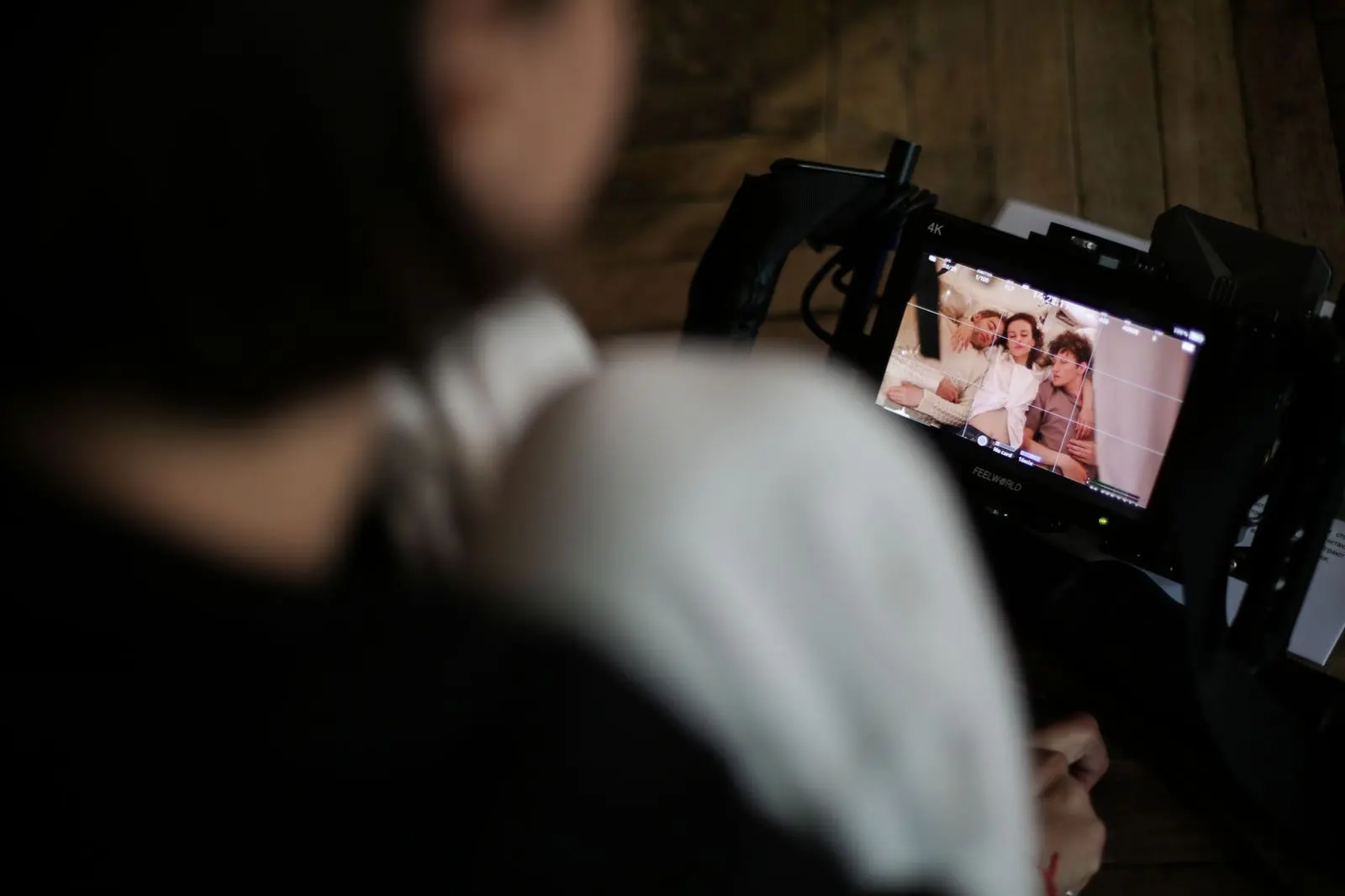
The close-up can still carry some background, but attention goes to the face, the emotion and the words written across someone’s expression, per Epidemic Sound. That guide singles out the trailer for Get Out for its terrifying close-ups.
The extreme close-up gives even more detail than a regular close-up, letting viewers see every pore of the subject’s skin, according to Epidemic Sound.
Once the frame is this tight, small details carry more weight, so it pays to read these shots alongside color symbolism in film.
How to read shot types as you watch
A short routine turns shot names into analysis rather than labels.
- Name the size by asking how much of the body and setting is inside the frame.
- Check the camera angle: Epidemic Sound says low angles usually stress power, fear or scale, high angles can belittle a subject, and a Dutch angle tilts the camera for a confused look.
- Look at the neighbors, because each size choice alters the shots around it, per StudioBinder.
- Decide what the frame stresses: the place, the relationship between people, or a single face.
Treat the body-part cut-offs as guidelines rather than rules. StudioBinder says “roughly” for the medium wide shot, and Epidemic Sound says “ideally”.
Frequently asked questions
How many types of camera shots are there?
Show answer
Epidemic Sound treats nine sizes as the core set and counts the establishing shot as an equally important tenth. Its full catalog spans more than thirty shots and angles.
What is the difference between a wide shot and an extreme wide shot?
Show answer
In a wide shot you can see the whole subject, and the setting gives context. Push out to an extreme wide shot and the person shrinks against the landscape, which is why StudioBinder says it makes a subject appear small against their location.
Which shot suits a tense conversation?
Show answer
The medium shot is a go-to for tense talk and smaller actions, per Epidemic Sound. For quick cutting between speakers, the guide recommends the medium close-up.
Is a camera angle the same as a shot size?
Show answer
No. Size is about how much fits in the frame, while angle describes where the camera sits relative to the subject. StudioBinder says the two together define a film’s visual language.