Ever finished a movie and wondered why it felt so tense or so slow? If you’re asking what is film editing, it’s choosing shots and assembling them to control pace, space and emotion.
This guide is part of the site’s film analysis series on the craft choices behind what you see on screen.
| Item | Key fact |
|---|---|
| Smallest unit of film | A shot: a piece of footage without any cuts |
| Golden Age Hollywood shooting ratio | 10:1 |
| Deadpool (2016) raw footage | 555 hours |
| Deadpool (2016) final film | 108 minutes |
| Deadpool (2016) shooting ratio | 308:1 |
| Kuleshov’s experiment shown to audiences | 1918 |
These figures come from the open textbooks Film Appreciation and Contemporary World Cinema. Figures can change, so check the source before you rely on them.
What does a film editor actually do?
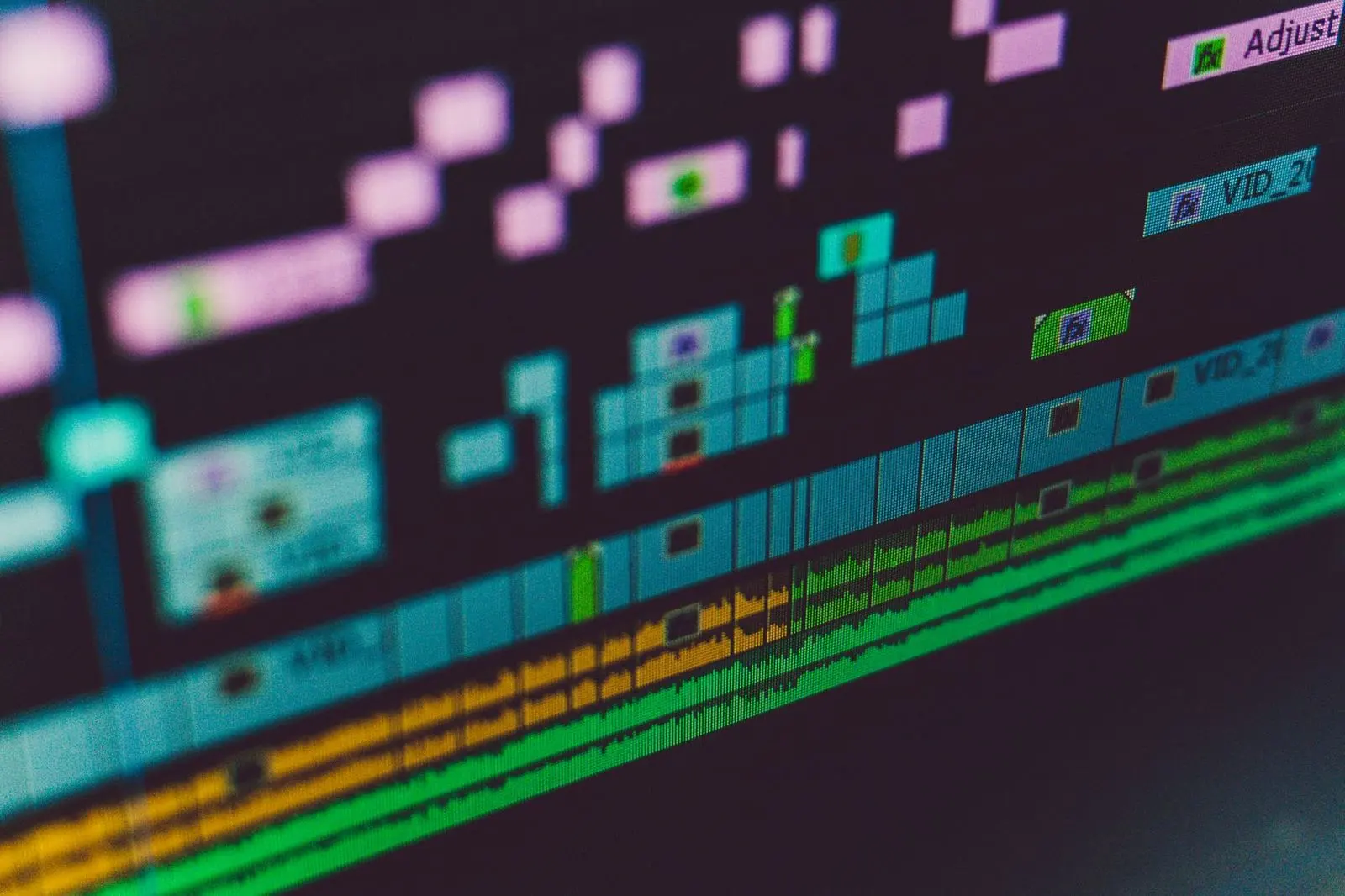
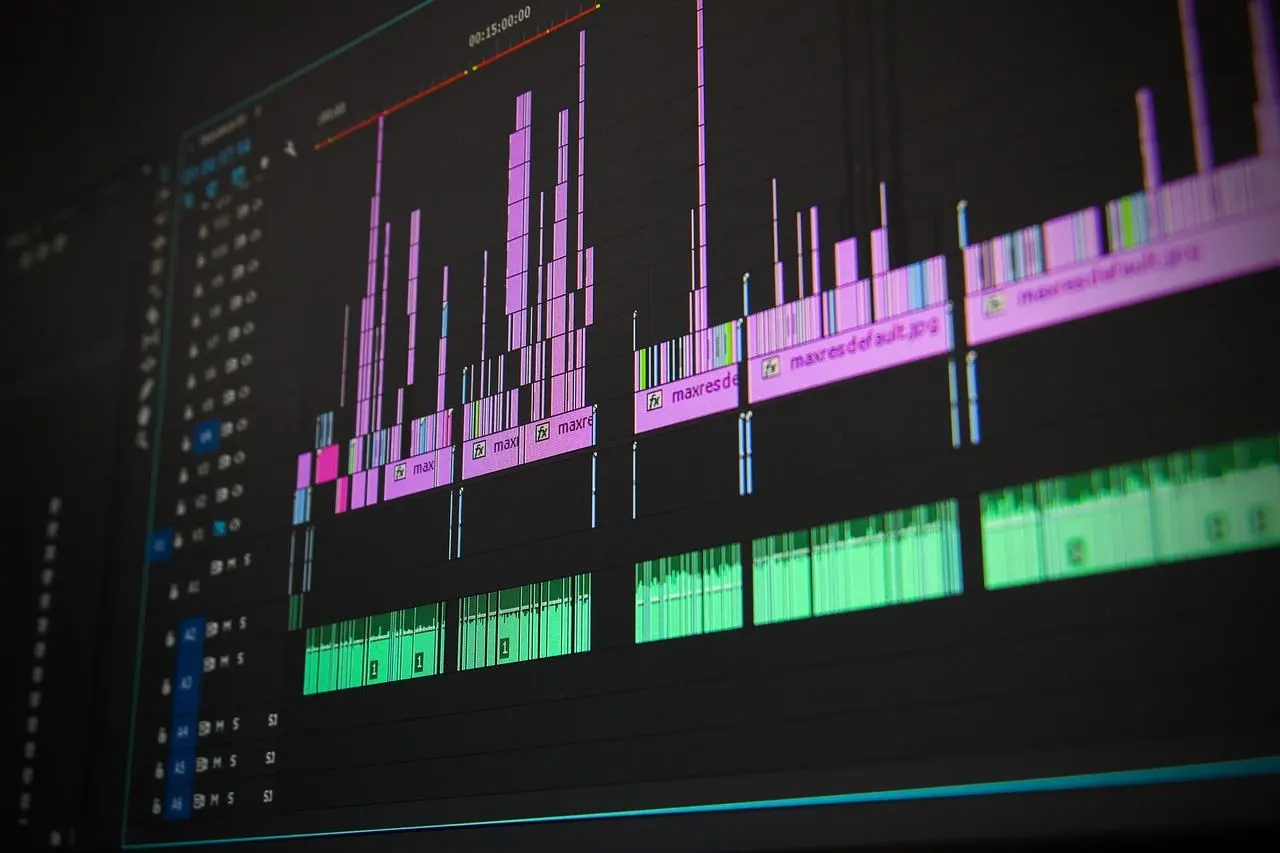
At its core, editing is selecting and arranging shots into a coherent story. After filming, the director hands the editor a mountain of film or data, and the editor sifts through it, selects, arranges and assembles it, as the Contemporary World Cinema textbook describes.
The job goes well beyond trimming running time. According to the Film Appreciation textbook, editing gives a scene its unique pace and rhythm, defines the space where characters move and talk, and can even change the expression on an actor’s face.
Editor and sound designer Walter Murch famously complained that audiences who whine about “bad editing” often just mean the film is too long, as the same textbook notes. His point is that editing is a far more ingrained process than final viewing length.
The Contemporary World Cinema textbook repeats a saying that a film is made three times:
- First by the screenwriter.
- Second by the director and crew.
- Third by the editor in post-production.
Shots, sequences and transitions: the building blocks
Editing vocabulary starts with a few units, defined in the Film Appreciation textbook:
- Shot: a single piece of footage without any cuts, and the smallest unit of film.
- Sequence: a larger unit made of several shots stitched together, usually in a single time and space.
- Shot-to-shot editing: stitching shots together into one sequence.
- Scene-to-scene editing: stitching sequences together, often across times or places.
- Transitions: optical effects such as a fade, dissolve, wipe or iris that mark a change of time or place.
Transitions are meant to be obvious. In Star Wars: A New Hope (1977), the scene on Tatooine and the scene on the Millennium Falcon are joined by a wipe, as the textbook points out.
Now compare two ways to film a fire. In Life of an American Fireman (1903), early directors placed the camera at a long distance so the actor and the blaze shared one shot. Within a decade, directors had learned to use close-ups for more emotional connection, according to Film Appreciation.
The edited version alternates flames and face: flames rising higher, the character’s shocked face, flames again, then eyes searching for water. The textbook says this brings us closer to what he is thinking, aids identification with the hero, and feels faster because it has more cuts.
How continuity editing hides the cut
Continuity editing combines related shots into a sequence that directs the audience’s attention to the consistency of story across time and location, according to No Film School. It should feel seamless, so the viewer follows the story and not the cuts.
That invisibility is learned. Early moviegoers in the 1890s did not have a strong understanding of editing, as Film Appreciation explains.
Common continuity tools include:
- Match cut: a cut where the composition of two shots is matched by action or subject. No Film School calls the graphic match from 2001: A Space Odyssey, where a bone turns into a spaceship, one of the most famous.
- Shot-reverse-shot: alternating between characters who face opposite directions, so the viewer assumes they are looking at each other.
- Eyeline match: a shot of someone looking, followed by an object shown from a perspective that matches their eyeline.
- Cross-cutting: editing between two scenes happening simultaneously.
The same article names the baptism scene in The Godfather as maybe the best example of cross-cutting. Cutting from the baby’s baptism to Michael’s deeds shows his descent into evil. As Murch put it, “The invention of editing is the thing that allowed film to take off.”
The Kuleshov effect and Soviet montage
Lev Kuleshov directed his first film in 1917, and in 1918 he showed audiences a short film he had cut together, per Contemporary World Cinema. Viewers raved about a famous actor’s subtle expressions of hunger at soup, sadness at a child in a coffin and longing toward a woman. The catch: it was the exact same shot of the actor every time.
That phenomenon became known as the Kuleshov effect: we derive more meaning from the juxtaposition of two shots than from any single shot in isolation, as the same chapter puts it.
Soviet Montage grew from these experiments. Its notable contributors include Kuleshov, Sergei Eisenstein, Vsevolod Pudovkin and Dziga Vertov, according to No Film School. While Hollywood filmmakers wanted to conceal their edits, the Soviets wanted to make them visible.
Discontinuity editing is the opposite of classical editing. In a discontinuous sequence, the filmmaker deliberately arranges shots that seem out of place or confusing relative to a traditional narrative, No Film School explains.
How much footage does an editor have to shape?
Volume is part of the job. During the Golden Age of Hollywood, most feature films shot about 10 times more film than they needed, a shooting ratio of 10:1, according to Contemporary World Cinema.
Digital cinema blew that ratio up. The filmmakers behind Deadpool (2016) shot 555 hours of raw footage for a final film of 108 minutes, a shooting ratio of 308:1, as the same textbook reports.
It would take 40 hours a week for 14 weeks just to watch all of that raw footage, the textbook adds. Managing that tidal wave of images is only one of the editor’s roles.
How to notice editing the next time you watch
You can train your eye with a few questions on any scene:
- Feel the pace: are the cuts quick, or does a long take hold the moment?
- Map the space: which shots tell you where each character stands?
- Watch the transitions: does a fade, dissolve, wipe or iris signal a jump in time or place?
- Ask what two shots imply together, the way the Kuleshov effect predicts.
- Decide whether the editing hides itself or draws attention to itself.
Editing never works alone, and it combines with other craft choices such as color symbolism in film to carry meaning. For a fuller method, read this guide on how to analyze a movie.
Frequently asked questions
What is film editing in the simplest terms?
Show answer
Think of it as assembly. Many early filmmakers used the French term “assemblage” for the craft, a reminder that editing is about the stitches between pieces of footage, as Film Appreciation notes.
Are viewers supposed to notice good editing?
Show answer
Often not. The Contemporary World Cinema textbook says much of editing’s power comes from the fact that we rarely notice how it works, so the mechanism feels intuitive and invisible.
Is discontinuity editing a mistake?
Show answer
No. Filmmakers who choose it mean to depart from the classical approach, so the apparent oddness of the shots is intended, per No Film School.
Does the editor only work after filming ends?
Show answer
Not always. Many editors help plan shots in pre-production, and many are on set so the crew captures what the story needs, though the heaviest work begins in the edit room, according to Contemporary World Cinema.