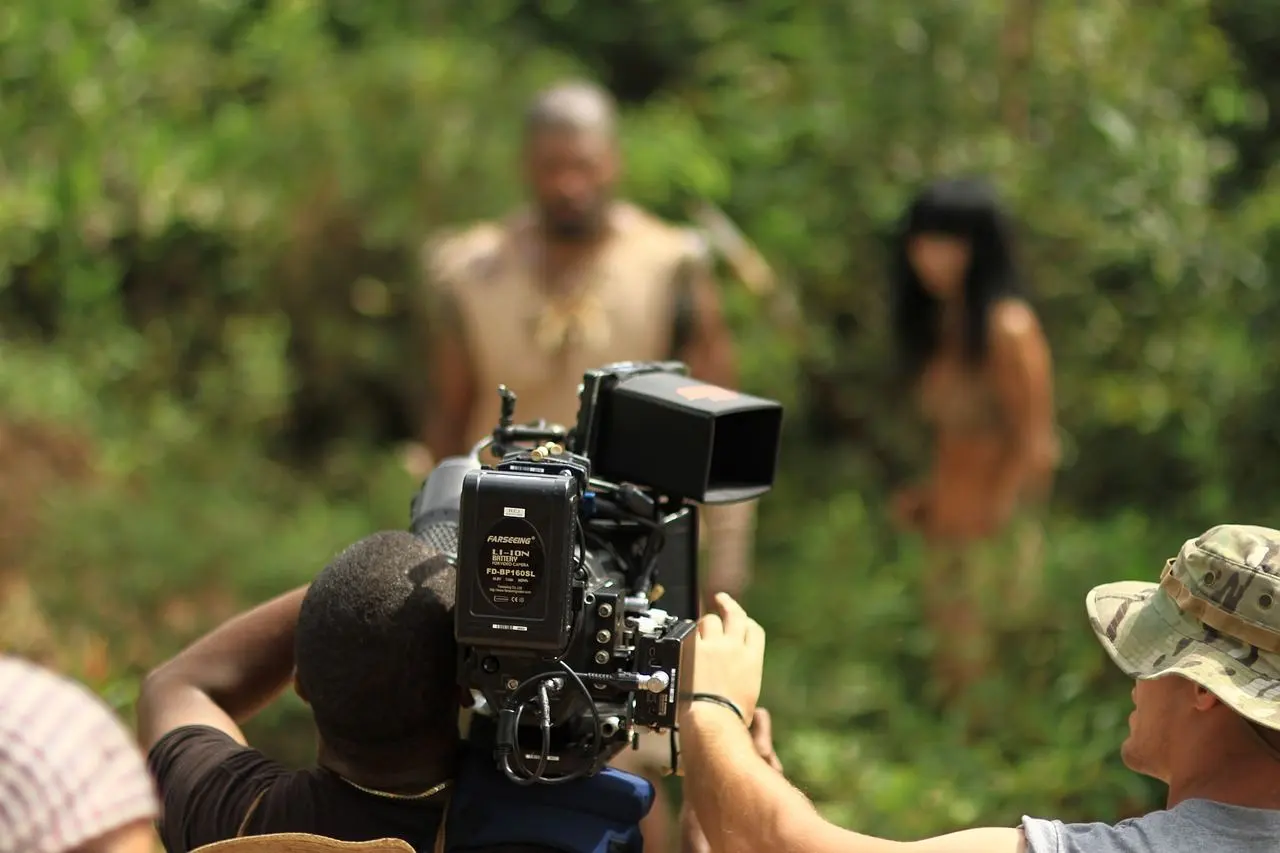
You keep hearing the term in film talk and wonder what is mise en scene. In short, it is everything staged in front of the camera: sets, costumes, props, lighting and how actors move.
This guide is part of our film analysis coverage, so it sticks to details you can spot on screen.
| Item | Value |
|---|---|
| Literal meaning (Columbia glossary) | “Staging in action” |
| Literal meaning (Oklahoma State text) | “To place within a scene” |
| Scope in Columbia’s definition | Everything in a shot’s composition, including framing and sound |
| Scope in Oklahoma State’s text | Setting, costumes and makeup, props, lighting, figure movement, staging; no cinematographic elements |
| Where the term comes from | Theater |
| Early theatrical example | A Trip to the Moon (1902) |
These figures come from the Columbia University Film Language Glossary and the Oklahoma State University open textbook. Definitions and dates can change, so check the sources before you rely on them.
Mise-en-scène defined in plain terms
The term is French for staging in action, according to the Columbia glossary. It began in the theater, and in film it covers everything that goes into the composition of a shot.
Oklahoma State’s open textbook translates it as “to place within a scene.” It says film studies uses the word for the parts of production involved in setting the scene or staging narrative action.
Critics have long struggled to pin the idea down. Wikipedia notes that Ed Sikov tried to define it as “the totality of expressive content within the image.”
A useful rule of thumb is that nothing on screen is neutral. In Oklahoma State’s example, Fritz Lang cuts to an empty chair at the Beckmann family’s dining table in M (1931) to show that the young child Elsie will never come home, as the textbook explains.
Absences count too. The same Wikipedia entry points to a director’s deliberate “big empty wall” where you would expect decorations.
The elements you can spot in any frame
Sources slice the topic differently, but the same pieces keep returning. Oklahoma State’s text lists these aspects for film analysis, and the items below follow that list with support from other sources:
- Setting and sets: a studio set or a real location. Per the Oklahoma State text, its function is to credibly establish the time and place of the film’s narrative.
- Costumes and makeup: together with sets and props, they work as an information-dense set of visual cues about character traits, narrative details and thematic meaning, as Oklahoma State puts it.
- Props: ordinary objects that gain meaning in context, like the empty chair in M.
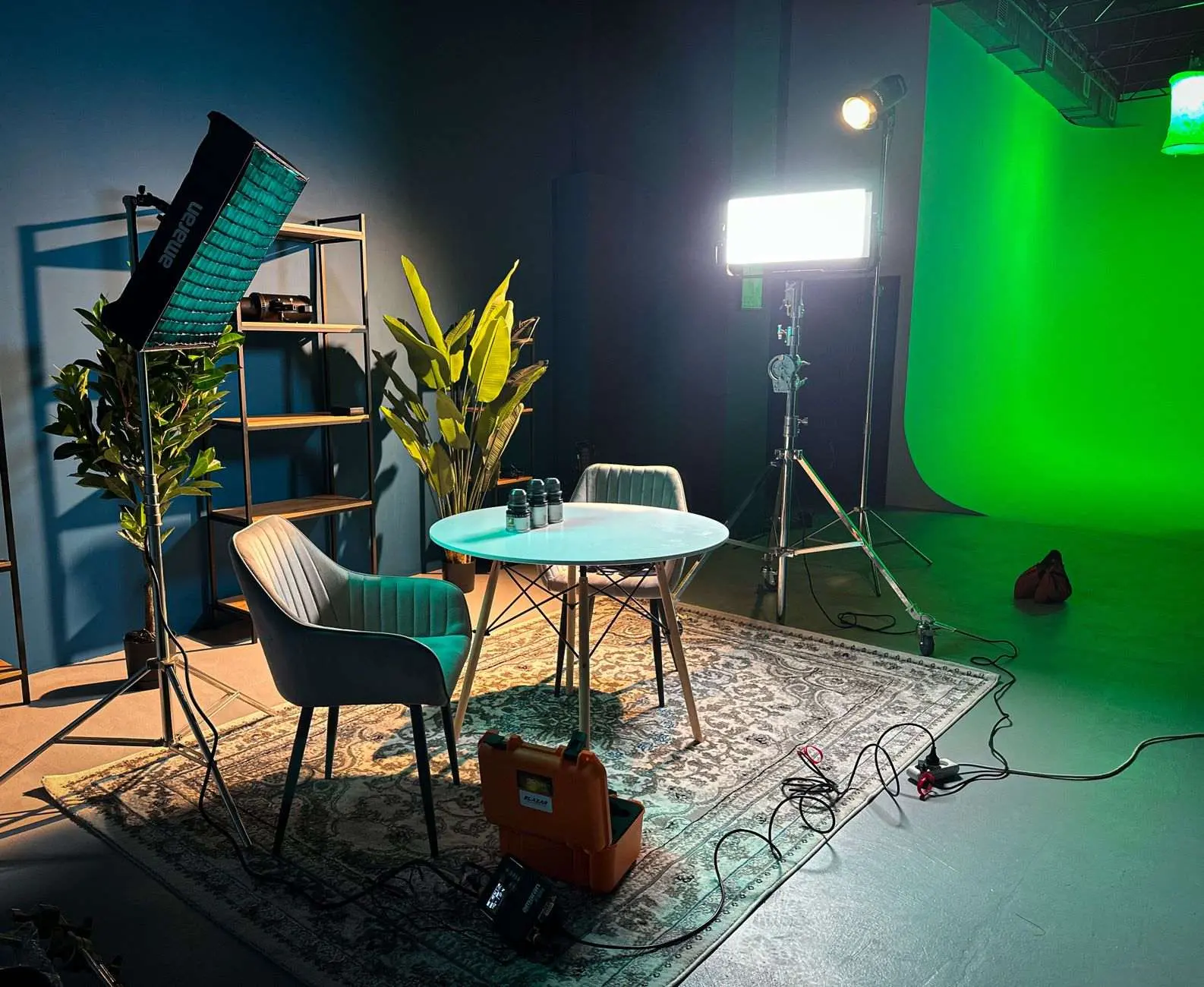
- Lighting: its intensity, direction and quality can shape how an audience reads characters, actions, themes and mood, Wikipedia says. The Conversation adds that low-key lighting creates shadowy areas that look foreboding.
- Figure movement and staging: composition includes the positioning and movement of actors and objects in the shot, overseen by the director and production designer, per Wikipedia.
Together, these choices do real work. Oklahoma State’s chapter says a film’s mise en scène establishes time and place, reveals narrative information, establishes character traits, creates mood and develops thematic meaning.
Consistency matters as well. The same textbook points to a Starbucks cup that was visible on set in an episode of Game of Thrones before being digitally scrubbed from later broadcasts, a slip that can break the illusion of a self-consistent world (Oklahoma State).
Where does camerawork fit in?
This is where sources disagree most, so the boundary of the term depends on who you read. Here are three common positions:
- Columbia: framing, movement of the camera and characters, lighting, set design, the visual environment and sound all count (Columbia glossary).
- Oklahoma State: the term does not involve any cinematographic elements, and it describes the preparatory work done before any camera makes it to set (Oklahoma State).
- The Conversation: framing counts, including camera position, depth of field, aspect ratio, height and angle, but camera movement does not. Diegetic sound is included (The Conversation).
In practice, use the definition your course or editor expects and stay consistent with it. If you want the camera side on its own terms, our guide to cinematography basics covers it.
Whatever the boundary, the idea works as a big-picture lens. The eCampusOntario textbook calls it an aesthetic context in which everything else takes place, the unifying look, or even feel, of a film or series.
Mise-en-scène in famous films
The examples below come straight from the sources and show how the same ideas play out across eras and countries.
Theatrical beginnings
Columbia’s glossary cites Georges Méliès’ A Trip to the Moon (1902) as an example of early cinema’s theatrical tendency. It also calls The Cabinet of Dr. Caligari (1919) a dramatic example of a world that is completely artificial, and says Conrad Veidt’s Cesare shows how acting belongs to mise-en-scène (Columbia glossary).
Studio looks and genre
Columbia describes Meet Me in St. Louis (1944) as an example of the MGM style, with elaborate sets and high-key lighting that took advantage of the biggest costume, property and art departments in Hollywood. It says the mise-en-scène of Mildred Pierce (1945) stresses noir themes such as no escape and being on the run (Columbia glossary).
Shadow does similar work in The Maltese Falcon (1941). The Conversation describes a vertical shaft of light that puts a forked shadow down a woman’s face and body, which it reads as confirming her duplicitous nature.
World cinema
Columbia points to Youssef Chahine’s Cairo Station (1958) for its use of onscreen space, camera movement, sound and symbolism. It also cites Zhang Yimou’s Raise the Red Lantern (1991) for bringing together elaborate, almost theater-like set design, music, sound and costume (Columbia glossary).
Contrast, color and character
Oklahoma State describes the pastel, cookie-cutter suburban houses of Edward Scissorhands (1990) clashing with the gothic mountaintop mansion where Edward lives alone. It also notes that the sepia-toned Kansas of The Wizard of Oz (1939) looks drab beside the colorful world of Oz (Oklahoma State).
The Conversation says red is used in contrasting ways throughout Don’t Look Now (1973), and that Travis Bickle’s sparsely decorated apartment in Taxi Driver (1976) reflects his isolation. It adds that colors may be repeated or contrasted to carry symbolic and emotional meaning (The Conversation).
The same Oklahoma State chapter shows how one location can serve many stories: the Bradbury Building appears in films as a Burmese hotel, a wartime London military hospital, a detective’s office and a dilapidated future ruin (Oklahoma State).
Directors can also be recognized by their approach. The eCampusOntario text names symmetrical compositions, slow motion in key scenes and smooth tracking shots in Wes Anderson’s films, though the overall effect is what makes the impression.
How can you analyze mise-en-scène in a scene?
Start with the questions Oklahoma State poses: why these choices and not the alternatives? The textbook says one goal of film analysis is to understand why certain choices were made over their possible alternatives.
- Pause on one frame and list what you see: setting, costumes, props, lighting and where the actors stand.
- Ask what each item says about time, place, character or mood.
- Look for gaps, because what is missing from a frame can be as meaningful as what is present.
- Track colors, objects and shapes that repeat or contrast across the film.
- Compare your reading with how the scene could have been staged differently.
Long takes are good practice material. Columbia says scenes that rely less on editing are often cited as the best examples to study, though it also notes critics who argue that composing a single frame can look just as artificial as heavy cutting (Columbia glossary).
Once you can read a single frame, our walkthrough on how to analyze a movie shows how to fit those observations into a full analysis.
Frequently asked questions
Is mise-en-scène the same as cinematography?
Show answer
Often no. Some textbooks keep the camera out and treat it as a separate subject, while others count framing as part of the picture. Check which version your course uses, as the Oklahoma State and Columbia sources show.
Who is responsible for a film’s mise-en-scène?
Show answer
Many people contribute, but the eCampusOntario text says it is the element of cinema most clearly the responsibility of the director (eCampusOntario). Wikipedia adds that the production designer generally leads the departments for sets, locations, props and costumes.
Can a realistic film still have mise-en-scène?
Show answer
Yes, every film has it. Oklahoma State says filmmaking always transforms reality, and the change can be small when a film resembles real life or large in a fantasy full of imaginary beings (Oklahoma State).
Why do film students use a French term?
Show answer
It was borrowed from the theater. The eCampusOntario textbook renders the phrase as “putting on stage,” so you will see slightly different English translations across sources.